Well guys, got some diag in. First pictures show the vacuum being provided by the vacuum pump with the brake booster disconnected. 27 inches of mercury, which seems more than sufficient to me. I checked this at the check valve that connects to the booster.
Then, I took the check valve line off the truck so I could do the blow test for the check valve. It passed. I could suck (from the vacuum pump side), but not blow through the line. So valve is good.
I took the line off the vacuum pump to check for oil in the line. There was some, but nothing major. I am going to replace the seals anyway. I checked further down the line at the joint and at the booster check valve. No oil was present so I don't think the booster seals were fouled by oil.
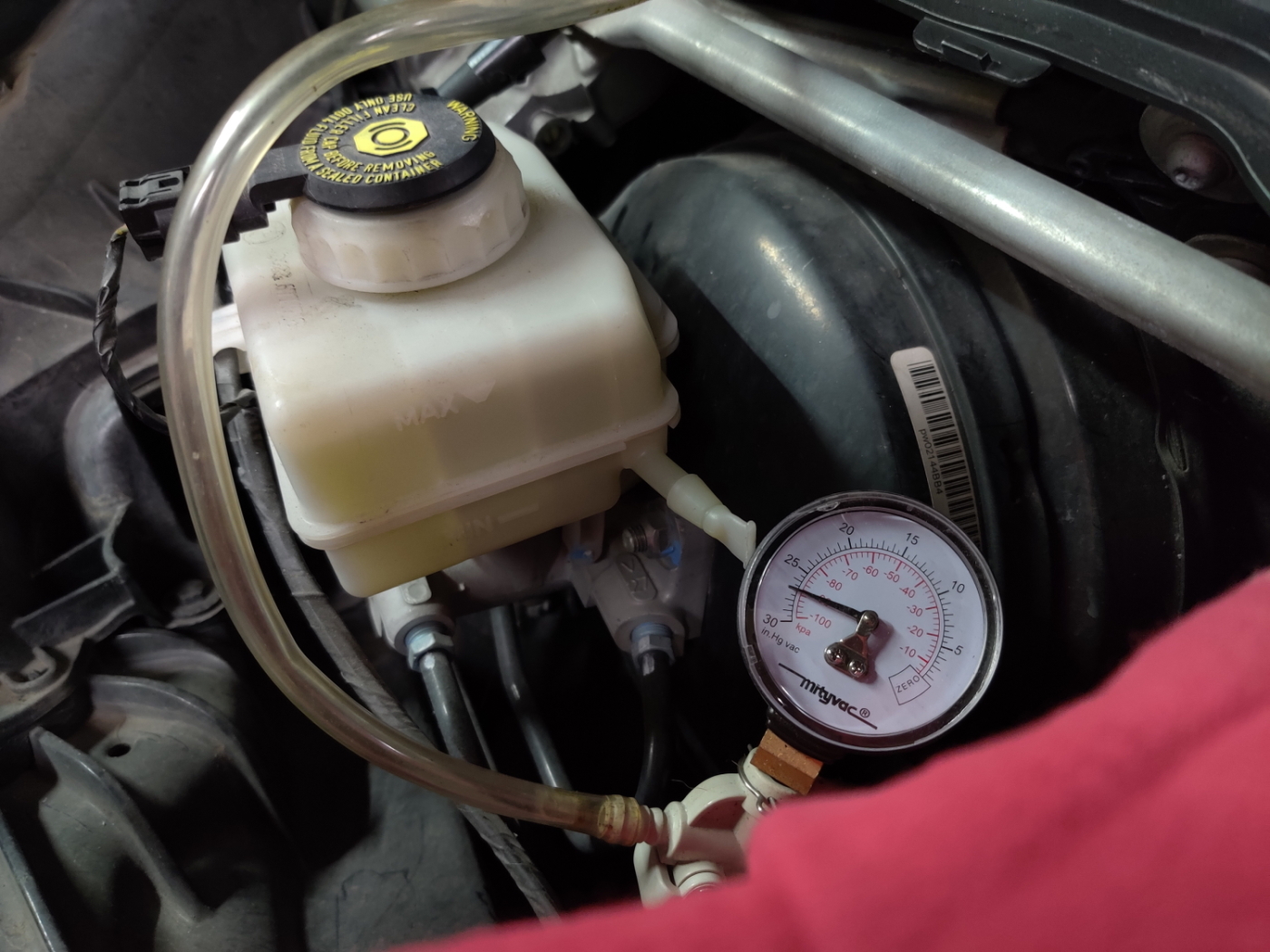
Then I T'd into the line with the mityvac/gauge so I could see vacuum with the booster connected. This leads me to a couple of questions, but I am leaning towards a failed booster rather than a failed vacuum pump. I think the vehicle sitting for so long in hot and cold over 2 years through the seasons with the vehicle very rarely being used and brakes being actuated led to the booster diaphragm being brittle. Then the ABS lockup test being administered during the inspection testing caused it to rupture/tear. Does this sound plausible? Here is a video I took of vacuum behavior with the entire circuit hooked up.
Questions:
- Max vacuum reached was about 25 in Hg rather than 27 with no booster in circuit. Assuming none of my joints were leaking (hah), does that mean it's leaking from the booster?
- How quickly should the vacuum climb after engine start? I should have noted that when I was testing without booster in circuit, but did not have a helper.
- How quickly should vacuum exit the system after the engine is shut off?
Thanks for any thoughts/suggestions. I still have things hooked up so can run any testing suggested. Am getting a parts order ready...