Congratulations on your excellent write-up civdiv99.
I’ve rebuilt around a dozen Range Rover 5HP24s in the past few months which had exactly this same “bearing then O-ring” failure
http://forum.landrovernet.com/showthread.php/189983-ZF-5HP24-teardown and it looks as though it will become a common problem on the 4.4i & 4.6is E53 too as their mileages rack up.
The axial needle roller bearing which wears & fails only sees a combination of load and relative speed in gears 1, 2 & 3 so I suspect it will be vehicles that have worked hard in these gears throughout the vehicle’s lifetime which will suffer this particular failure (towing, ‘sporty’ driving, hilly terrain, etc.). Vehicles that spend their lives predominantly cruising up and down the motorway are likely to be safe from this particular failure.
Please forgive me if I missed it, but reading through your excellent posts I notice that you didn’t make specific reference to the condition of the O-ring which seals the input shaft to the B-clutch drum so I think it’s worth pointing out that it’s the failure of this O-ring which allows the A-clutch pressure to bleed to tank (& therefore drive is lost in gears 1 to 4) and that the O-ring fails because the axial bearing wear allows the input shaft and B-clutch drum to separate under load (as you stated). Perhaps you could confirm that this O-ring had failed in your case?
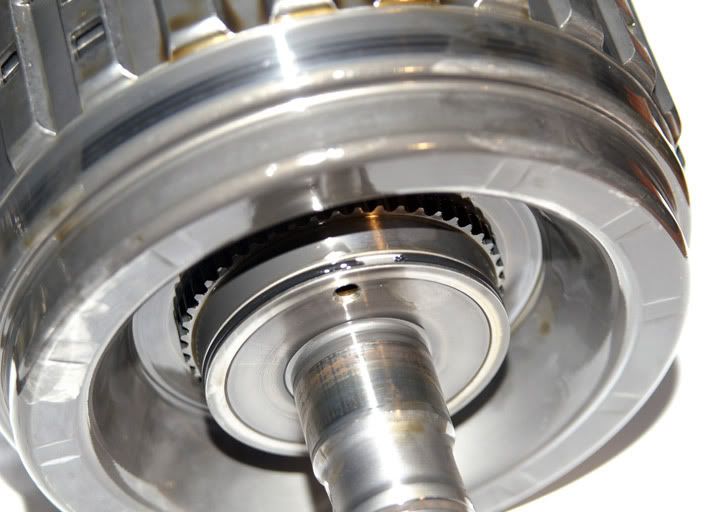
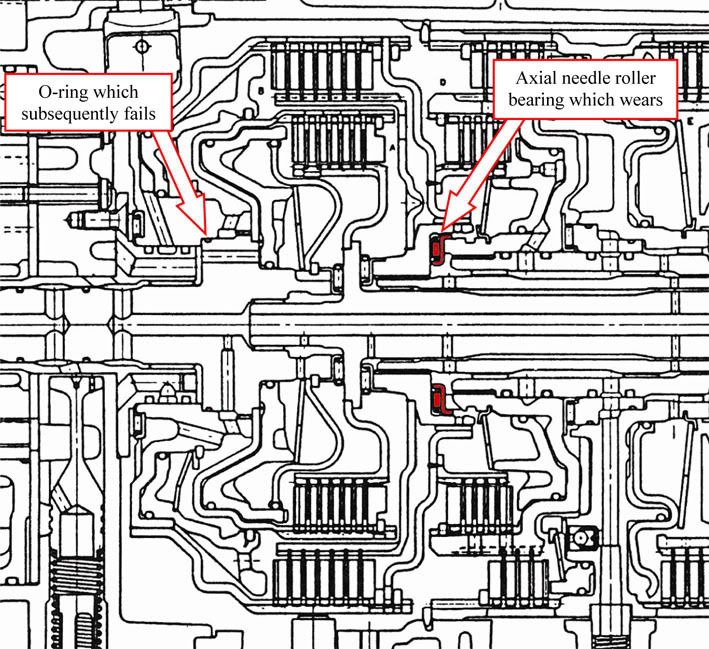
It’s easy to identify if a 5HP24 has this specific problem when it’s sat on a bench, even before stripping it, by grabbing the input shaft and trying to move it axially. The correct endfloat is 0.2 to 0.4mm. If the axial bearing has worn/failed you will be able to move the shaft by 1-2 mm.
Phil
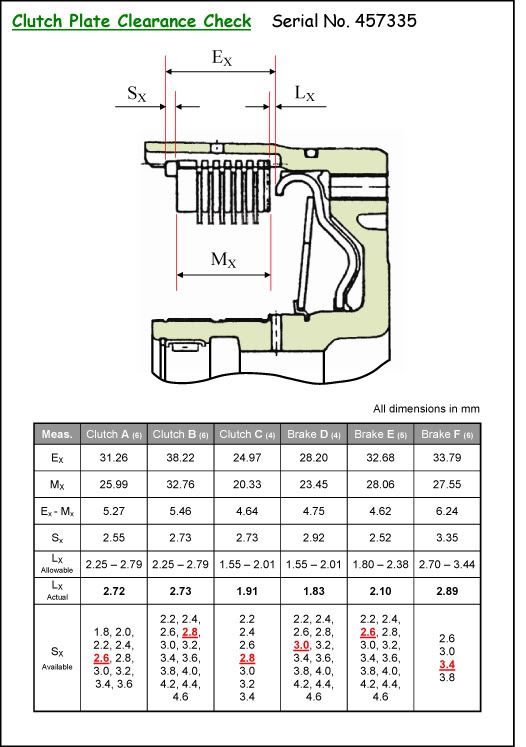
P.S. Regarding the ‘fancy jig’ for setting up the clutch plate clearances, I simply use a 20.4kg weight (i.e. 200N) to preload the wavy plate which has a radial slot cut in it to allow the thickness measurements to be taken